


When quality matters, it’s important to understand what that word actually means when it comes to hot tubs. Aesthetics, spec sheets and special features may influence the decision-making process but they have next to nothing to do with the quality of a product.
What determines quality? Here are six things that matter:
- Comfort & Massage
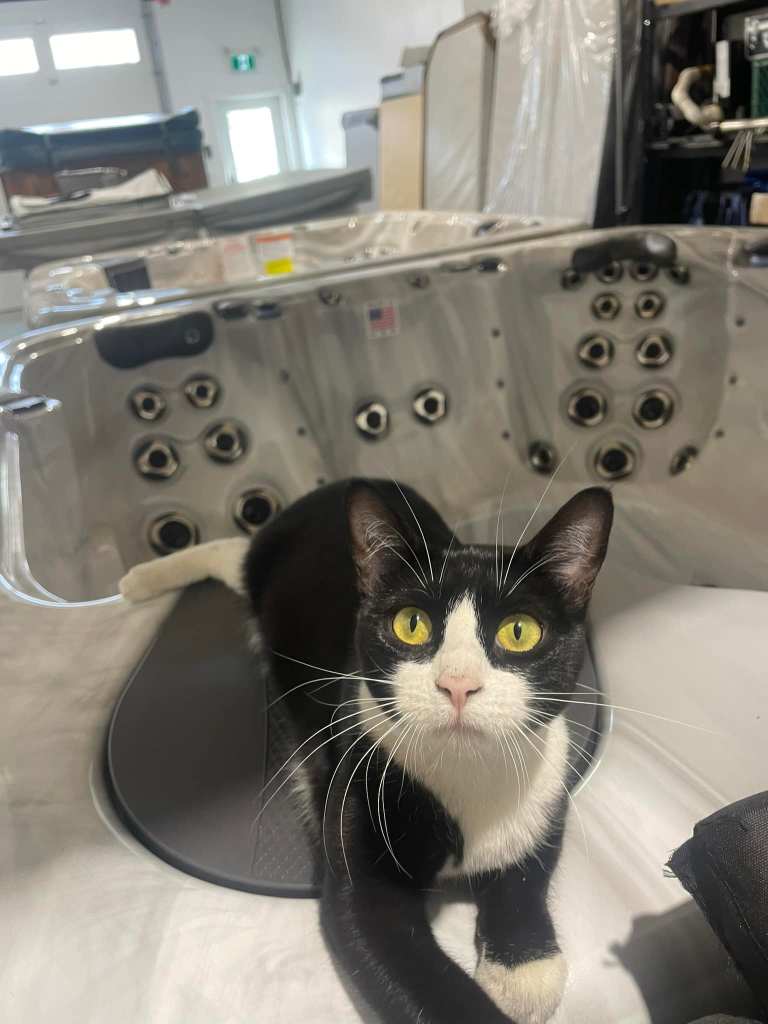
The whole point of a hot tub is relaxation and/or therapeutic massage. Some cheap hot tubs feel OK dry in the showroom but when you spend any time in them when activated, they turn out to be uncomfortable, with badly-contoured seats, poorly placed jets, confusing controls and annoying features.
A high-quality hot tub has been carefully thought through by designers and each detail has been painstakingly planned with comfort and massage in mind, with intelligently placed jets and a seating layout that feels just right when actually in use, not just feel OK on the showroom floor.
2. Performance & Reliability
Performance and reliability have to do with the equipment (motors, pumps, thermostats, heating elements, circuit boards, digital controls, flow switches, high limit switches, impellers, seals, bearings, etc.).
The differences between higher and lower quality equipment may be apparent immediately in some cases, but sometimes it’s not until later that they become evident.
3. Engineering
Some brands meticulously plan every aspect while cheaper brands just drill holes in a shell, install jets and pipes, put in equipment and viola, let’s hope for the best. A well-engineered tub will perform better, last longer and offer a more pleasant experience, just as would be the case between a cheap car and a high end one.
- Workmanship
Precision work and attention to detail during the manufacturing process makes a huge difference. Things like how carefully the acrylic is pulled, how well the fiberglass is applied, how meticulously aligned the jet holes are, how snug the jet bodies fit into their spaces, and a million other details.
- Plumbing Design
In a poorly planned hot tub arterial system, some jets are considerably weaker than others. The further from the pump, the weaker they become. For instance, a jet with a 10-foot feeder hose will be a lot weaker than one with a 1-foot hose. But a good spa manufacturer has done the math and figured out how to provide equally strong pressure to each jet.
A well-engineered plumbing arterial system has short-as-possible runs, uses high-flow pipes and hoses, and eliminates “T” joints and sharp angles. That’s why some higher end hot tubs can get away with a smaller pump while other manufacturers have to compensate for poor plumbing by putting in a big motor.
Inefficient plumbing stresses the joints and strains the hoses so that there is a much higher chance of leaks developing, and delivers less pressure per jet per horsepower.
- Durability & Longevity
Some hot tubs start looking ugly and begin blowing apart after a couple years, while others stay handsome and solid for decades.
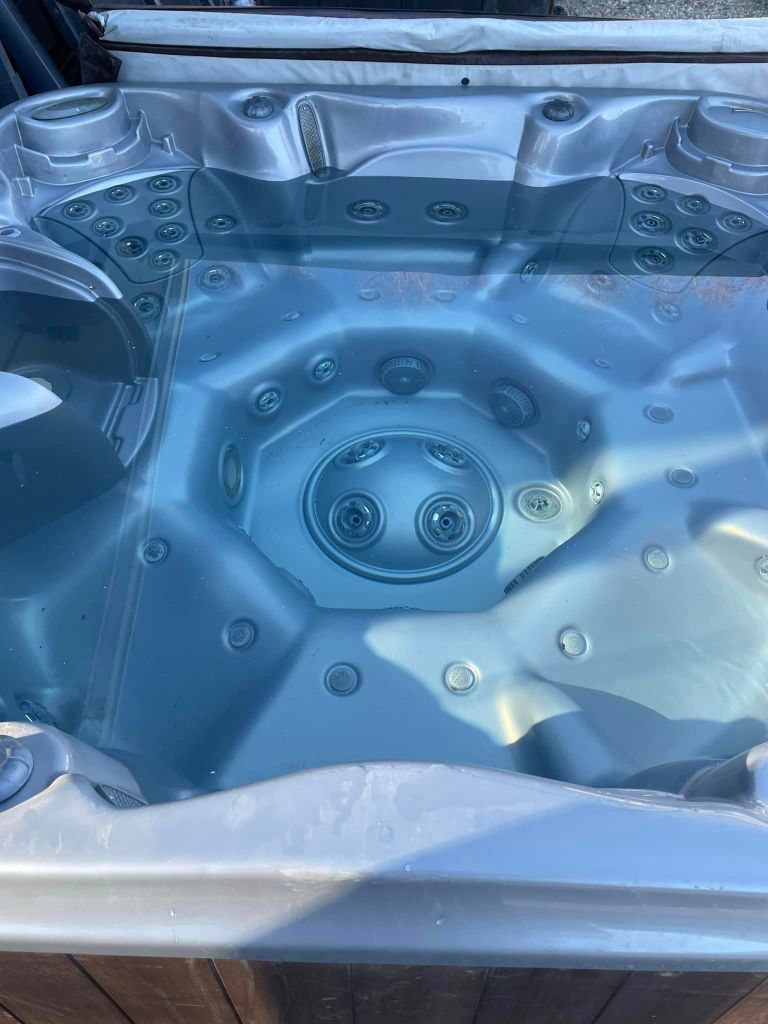
It’s not usually the quality of equipment that determines the life expectancy of a hot tub – rather, it’s the physical hot tub and cabinet.
Things like the kind of wood they use – the kind of glues, gaskets, silicones, epoxies, resins, acrylics, pipes, clamps, hoses, fitting, fiberglass, composites, staples, plastics, foam parts, screws, jets, primer, insulation, vinyl, trim, lubricant, fasteners, seals, etc.; these are the things that determine how long a hot tub will last.
It’s interesting to note that none of the above can be known by just looking at a hot tub in a showroom or reading a spec sheet. And most salespersons aren’t educated enough on these topics to really know the difference. So if quality matters to you, then we suggest a name brand that is familiar and established.
The current condition, overall health and longevity of a hot tub largely depend on three things:
- How Well It’s Made – How old is the wrong focus!
This has to do with engineering, workmanship and quality of materials. There can be big differences between brands and models. Older brand name hot tubs with new high end parts can far outlast a newer, “budget” brand hot tub, with mid-grade parts. There is a reason why these tubs are worth what they are worth new, compared to big-box-store brands. The established companies do not cut corners and cheap out on parts and fabrication, thus resulting in a higher quality product for a higher MSRP.
You’ll likely be better off with a 25-year-old Coast Spa than a 5-year-old Overseas / Big Box Store Brand Spa because Coast Spas are way better built, and they can last ten times longer.
2. What Repairs, Improvements and/or Upgrades Have Been Made?
Repairs, replacements, upgrades and on-going upkeep can fix and/or avoid problems and improve its performance and longevity.
An older hot tub with newer/upgraded equipment can run like new, while a newer one with original/lower grade equipment may run poorly and be at risk of failing soon.
3. How Well It’s been Treated
Hot tubs need to be cared for and properly maintained (correct water balance, frequently serviced, protected from the elements, kept clean, etc.).
A well-maintained, well-kept older hot tub in a gentle environment will be in better condition and last way longer than a neglected newer one in an aggressive environment.
There’s more to a warranty than the length of coverage. What’s more important is what’s covered, how it’s covered, and the track record of the company when it comes to customer care.
Some companies have a mediocre-sounding warranty at a glance, but they have an excellent track record for prompt “service with a smile” and go way beyond what’s technically required of them.
Some factory warranties require that a suspected failed part be sent to the factory for inspection/confirmation (shipping not covered by warranty), then the factory will send a replacement part if they deem it to be covered, which could take ages.
Some vendors do not have their own dedicated parts and service department – they subcontract that work out to other companies. When things get busy it may take a couple weeks or more before someone is able to book an appointment, and it could take weeks to resolve if it’s not a simple fix.
Tips:
-Check out the manufacturer’s website to see how easy it is to contact them for customer service.
– Ask for the more detailed document explaining the warranty and read the fine print, not just the bullet points.
– Phone the vendor and ask if they have a parts and service department and ask how soon they can arrange to have someone come by to fix your hot tub and see how they respond.
– And ask the parts and service department (not the salesperson) what the protocol/procedure is when there’s a problem.
Ozonators Explained:
From new out of the box, ozonators have a lifespan of a maximum of 3-5 years of life. Yes, you do need a small amount less of chemicals while the ozonator is in function. However, most people don’t generally notice much benefit and don’t replace them when they fail. The cost of replacement for an ozonator far exceeds the dollar amount of any chemicals you will save for the hot tub.
Salt systems explained:
1. Chlorine is still the chemical used to kill bacteria, just in an alternative form.
2. Salt Cell Generators are an expensive upgrade. Salt cells average replacement every 1-2 years.
3. Salt cells generate automatically and will continue to produce chlorine daily. A tub that goes un-used by bathers can cause issues from over chlorination. Chlorine is acidic and corrosive if used in excess. If more sanitizer becomes available, then there are bacteria for it to neutralize, then it can cause damage to the tub’s components.
4. Users are still required to balance the Total Alkalinity, pH and clean filters to maintain healthy water chemistry.
5. The constant presence of Sodium Chloride (aka Salt) is also corrosive. Over time the salt content will cause rust & deterioration to the hot tub’s components. Users will be required to replace heat elements, manifolds, pump seals & other equipment far sooner than necessary.
6. Salt systems have been banned in Canada. bromide spa products used in combination with potassium monopersulfate will be removed from Schedule 2 of the Pest Control Product Regulations as part of future regulatory amendments and will no longer be permitted for use.
Swim University/Hot Tub University Offers Their Detailed Review Of Big-Box Store Hot Tubs
 MCL Pool & Spas